
Kitchen counters are often hard to clean because porous surfaces and textured seams trap bacteria, food particles, and stains. Marble solves this problem by providing a naturally cool, high-density surface that, when professionally sealed, creates a smooth, wipe-and-go workspace that resists heat and prevents deep-seated grime buildup.
Technical Specifications: What Makes a Surface “Cleanable”?
To understand why some materials fail in a busy kitchen, we must look at the physical properties of stone versus synthetic alternatives. Cleanability isn’t just about how a surface looks after a quick wipe; it’s about microscopic hygiene and the material’s interaction with organic matter. When homeowners explore marble countertops in Richmond, VA, they are often looking for a balance between this technical performance and timeless beauty.
- Porosity Rating: This is the measure of “voids” or microscopic holes in a material. High-porosity surfaces, like unsealed concrete or low-grade laminate with wear-and-tear, soak up liquids. Marble is a high-density metamorphic rock that, when treated, offers a formidable barrier against liquid absorption.
- Fungal and Bacterial Resistance: A non-textured, smooth surface is inherently more hygienic. Because marble can be fabricated into large, seamless slabs, it eliminates the grout lines found in tile, which are notorious breeding grounds for mold.
- Thermal Conductivity: Marble has high thermal mass, meaning it stays naturally cool to the touch. This isn’t just a luxury; it prevents food particles from “baking” onto the surface if a warm dish is placed nearby, making cleanup effortless.
- Surface Tension: A polished marble finish reduces surface tension, allowing liquids to bead up rather than spread out and soak in, provided the stone has been properly maintained.
Cleanability Comparison: Popular Countertop Materials
Not all surfaces are created equal when it comes to the daily “crumb and spill” test. Whether you are remodeling a historic home in Midlothian or a modern space in Chesterfield, the material you choose dictates your daily maintenance routine.
Comparison: Surface Maintenance & Hygiene
| Material | Surface Texture | Stain Resistance | Heat Resistance |
| Laminate | Prone to peeling and seams | Moderate | Low (High risk of melting) |
| Tile | High (Grout lines trap dirt) | Low (Grout is highly porous) | High |
| Marble | Ultra-Smooth & Seamless | High (When Sealed) | Excellent |
| Wood/Butcher Block | Fibrous and porous | Low (Bacteria trap risk) | Moderate |
Exceeding Expectations: The Tiger Standard of Care
We solve the dilemma of high-maintenance kitchens. At Tiger Granite & Marble, we strive to exceed your expectations with high-quality service, professionalism, and care for you and your home. We are a family-owned & operated company with over 15 years of experience in the construction industry.
Our family-oriented team understands that a kitchen isn’t just a showroom, it’s the heart of your home. During a recent consultation for a property in Petersburg, we helped a homeowner transition from aging, stained tile to marble countertops. The primary goal wasn’t just aesthetics; it was reducing the time spent scrubbing grout.
Our specialized “Tiger Seal Restoration” protocol is what truly sets us apart. This isn’t just a simple spray-on product; it is a proprietary process where we deep-clean the stone’s pores and apply a high-performance, breathable impregnating sealer. This ensures that your Richmond marble countertops remain as easy to clean in year ten as they were on day one. We believe in guiding you through every step, ensuring you feel confident and excited about your investment.
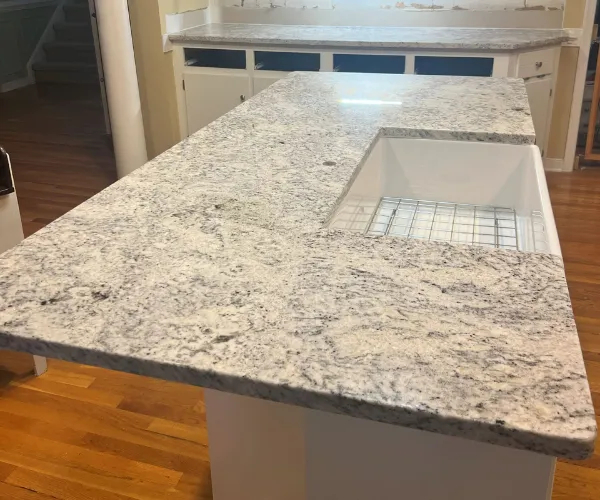
Debunking the Myth: “Marble is Too Delicate for a Real Kitchen”
A common industry misconception is that marble is far too “soft” or “fragile” for an active family. This myth often prevents people from choosing the material they truly love. While it is true that it is a natural, softer stone than granite, it has been the primary choice for European bakeries and professional kitchens for centuries.
The “delicacy” people refer to is usually acid etching, a dulling of the polish that occurs when lemon juice or vinegar is left on the surface. However, this does not mean the stone is dirty or damaged. In fact, many high-end homeowners prefer a “honed” finish, which hides etching entirely and provides a soft, satin look that is incredibly easy to maintain. Marble isn’t fragile; it’s a “living” stone that develops a beautiful patina over time while remaining structurally sound and hygienic.
How To Perform the “White Cloth Test” for Surface Cleanliness
If you are unsure whether your current counters are truly clean or just “look” clean, you can perform a simple diagnostic at home. Take a clean, white microfiber cloth dampened with only warm water and wipe a 12-inch section of your counter using firm pressure. If the cloth shows a gray or yellowish tint, your surface has “micro-porosity” issues where oils and detergents are becoming trapped in the material’s texture. For those with marble countertops in Richmond, you can also test your seal by placing a few drops of water on the surface; if the water beads up after ten minutes, your protection is intact. If the water soaks in and darkens the stone, it is time to reapply a professional-grade barrier and restore your kitchen’s hygienic integrity.
Achieving the Perfect Workspace: Why Texture Matters
The reason many people find their current counters hard to clean is “micro-texture.” Cheap laminates or worn-down solid surfaces develop microscopic pits and scratches over time. These pits hold onto oils and food dyes, creating a “hazy” look that no amount of spraying can fix.
Richmond, VA marble countertops provide a level of density that resists this micro-pitting. When you work with a professional team, we use custom cutting and precision measurements to ensure that seams are nearly invisible and perfectly leveled. This “seamless” approach means there are no edges to catch your cloth or trap crumbs, making your post-dinner cleanup a thirty-second task rather than a chore.
Conclusion: Elevate Your Kitchen Experience
Choosing the right countertop is about more than just a color swatch; it’s about how you interact with your home every single day. If you find yourself frustrated by stains that won’t budge or grout lines that never look clean, it might be time to consider the smooth, hygienic, and heat-resistant properties of marble.
At Tiger Granite and Marble, we take pride in being more than just installers, we are your partners in home improvement. As a family-owned business with years of experience, we bring a personal touch to every project. We want you to feel inspired by your space and confident that your new surfaces will stand the test of time.
Ready to transform your kitchen into a low-maintenance masterpiece? Contact us today for a free estimate and let our expert team help you bring your vision to life with high-quality service, professionalism, and care for your home!
Frequently Asked Questions
Does marble stain easily with red wine or oil?
While natural stone is porous, a professional installation includes high-grade sealing. This creates a barrier that gives you ample time to wipe up spills. For homeowners seeking marble countertops, we always provide a detailed care guide to keep the barrier strong.
What is the best way to clean marble daily?
You don’t need harsh, abrasive chemicals. A simple mixture of warm water and mild dish soap, or a dedicated stone cleaner, is all it takes to maintain a sanitized, sparkling surface. Avoid “vinegar and water” solutions, as the acidity can dull the polish over time.
Is marble more expensive to maintain than quartz?
Marble requires a simple re-sealing every 12 to 24 months, a process that takes about 15 minutes. In exchange, you get a heat-resistant surface that won’t scorch or melt, a common issue with resin-based quartz.
Why is marble better for dough and baking?
Marble’s natural ability to stay below room temperature makes it the gold standard for rolling out pastry dough. It keeps the butter in the dough from melting, ensuring flaky crusts every time.