
Quartz countertops can gradually develop a yellow tint or discoloration when exposed to prolonged direct sunlight because they are made of natural quartz crystals bound with polymer resins and pigments; while the quartz is highly stable, the resin is not fully UV-resistant, and over time UV radiation and heat cause chemical changes that can alter the surface’s tone, clarity, or brightness. This is usually a slow process that occurs over years and is most noticeable in spaces with large windows, skylights, or layouts where countertops receive extended daily sunlight exposure.
What Causes Quartz to Change Color in Sunlight
Quartz countertops are engineered stone surfaces made of about 90–95% crushed quartz bound with polyester or epoxy resins and pigments. The quartz provides strength, while the resin acts as the binding agent and is the most UV-sensitive component.
When sunlight passes through glass, its UV radiation can cause photo-oxidation of the resin, gradually breaking down chemical bonds and leading to slight yellowing, dulling, or uneven color shifts over time. Heat can accelerate this process by raising surface temperatures, especially near large or west-facing windows.
In some cases involving quartz countertops in Richmond, prolonged exposure without UV filtering has been associated with gradual tone variation near areas with strong sunlight exposure.
Primary Mechanisms Behind Discoloration
- UV degradation of polymer resins – ultraviolet light breaks molecular bonds in the binder system
- Thermal stress from heat cycles – repeated expansion and contraction weakens resin stability
- Pigment instability in lower-grade slabs – some dyes are more sensitive to light exposure
- Surface oxidation over time – slow chemical reaction that becomes visible after prolonged exposure
These factors rarely act alone. In most real-world cases, discoloration results from multiple environmental stressors acting together over long periods.
Material Behavior: Quartz vs Other Countertop Surfaces
Different countertop materials respond differently to sunlight exposure. Quartz is engineered for durability and consistency, but its resin content causes it to behave differently from fully natural or sintered materials.
| Material | UV Resistance | Color Stability | Maintenance Level | Long-Term Sun Exposure Performance |
| Quartz | Moderate | High indoors | Low | Moderate sensitivity over time |
| Granite | High | Very high | Medium | Excellent long-term stability |
| Marble | Low | Variable | High | Prone to etching and fading |
| Porcelain | Very high | Very high | Low | Excellent UV resistance |
Quartz remains one of the most popular interior surfaces because it resists staining, scratching, and general wear extremely well. However, its resin content introduces a vulnerability that natural stone does not have when exposed to prolonged sunlight.
Why Quartz Quality Makes a Noticeable Difference
Not all quartz surfaces are manufactured the same way. Differences in resin chemistry, pigment quality, and UV stabilizer content significantly influence how a slab performs under long-term sunlight exposure.
Higher-end quartz products are engineered with UV inhibitors that slow down oxidation and help preserve color consistency. Lower-cost products may reduce or omit some of these stabilizers, increasing the likelihood of gradual discoloration in high-light environments.
In real-world remodeling projects, homeowners comparing quartz countertops often notice that premium slabs maintain their original appearance longer, especially in kitchens with large windows or open-concept layouts where natural light exposure is constant throughout the day.
Key Technical Specifications
Resin-to-Quartz Ratio
This determines how much polymer binder is used relative to the amount of quartz aggregate. More resin can improve flexibility but may increase UV sensitivity if not properly stabilized.
UV Stabilizers
Additives designed to absorb or block UV radiation and slow the breakdown of polymer chains.
Pigment Stability
The ability of colorants to maintain consistent tone over time when exposed to light and heat.
Surface Density and Compaction
Higher density reduces microporosity and improves resistance to environmental stress.
Environmental Conditions That Increase Risk of Yellowing
Quartz discoloration is strongly influenced by environmental exposure, not just material composition. Even high-quality quartz can show subtle changes if installed in high-exposure conditions.
Common high-risk environments include:
- South- or west-facing windows with strong afternoon sunlight
- Skylights with direct overhead UV exposure throughout the day
- Floor-to-ceiling glass walls without UV protection
- Countertops positioned directly in sunlight paths
- Minimal use of blinds, curtains, or light-diffusing treatments
In residential layouts featuring quartz countertops in Richmond, VA, environmental design often plays a larger role in long-term appearance than the material itself.
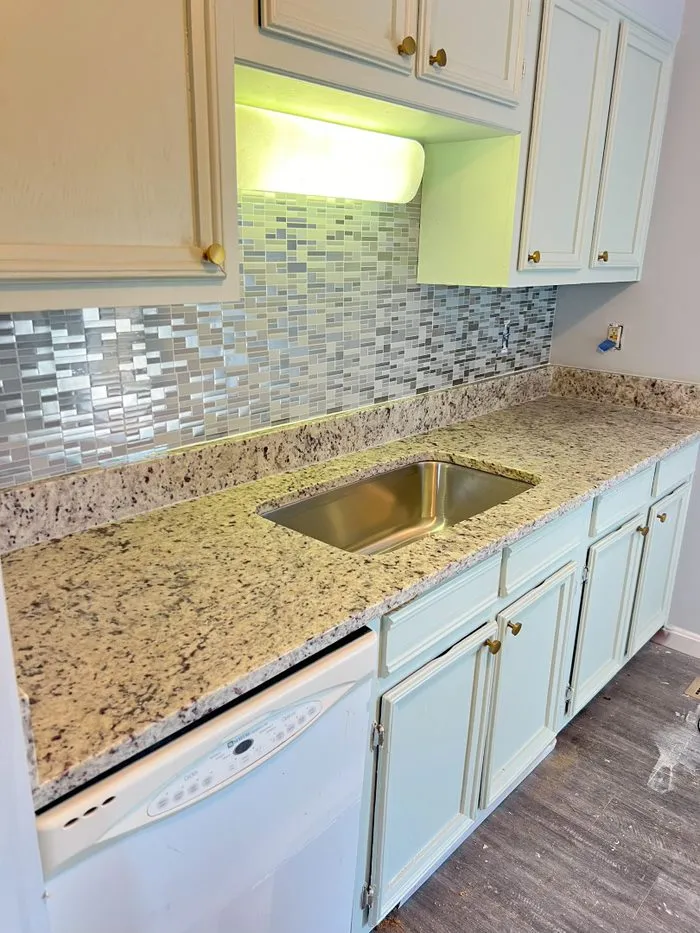
Applying a Real-World Quartz Exposure Evaluation System
At Tiger Granite and Marble, quartz performance is evaluated using a structured environmental assessment approach that considers both material characteristics and installation conditions. This helps predict long-term appearance stability more accurately than material specifications alone.
Practical Evaluation Method
- Identify daily sunlight exposure zones across the kitchen layout
- Determine intensity and duration of direct vs indirect light
- Review manufacturer specifications for UV resistance and resin composition
- Assess window treatments such as tinting or UV film
- Evaluate seasonal changes in sunlight angle and intensity
- Model long-term exposure impact across key countertop areas
This approach is particularly useful in modern homes with large open spaces and extensive glass installations, where sunlight exposure varies significantly throughout the day.
Misconception: Quartz Is Completely Immune to Sunlight
A common misunderstanding is that quartz countertops cannot discolor or change color under any conditions. This is not accurate.
Quartz is extremely durable, non-porous, and highly resistant to staining and scratching. However, it is not completely immune to ultraviolet exposure. The resin system used to bind quartz particles can still degrade when exposed to prolonged sunlight.
The correct interpretation is that quartz is UV-resistant, not UV-proof. This distinction is critical for setting realistic expectations, especially in bright kitchens or modern open-concept designs.
Installation Factors That Influence Long-Term Appearance
Even premium quartz can show subtle changes if installed in environments with sustained sunlight exposure. Installation planning plays a major role in long-term performance.
Key factors include:
- Orientation of countertops relative to window direction
- Distance between countertop surfaces and glass panels
- Use of UV-blocking film or tinted glass
- Interior heat buildup from sunlight exposure
- Duration of daily direct exposure across seasons
In modern remodels using Richmond, VA, quartz countertops, installers often adjust the layout or recommend shading solutions to reduce direct exposure to primary work surfaces.
Preventing Quartz Discoloration Over Time
While discoloration cannot always be reversed once it begins, it can often be significantly delayed or minimized through proactive design and maintenance choices.
Proven Prevention Strategies
- Install UV-blocking window film to reduce ultraviolet exposure
- Use blinds, shades, or curtains during peak sunlight hours
- Select quartz products with verified UV-stable resin systems
- Avoid placing primary countertop work zones in direct sun paths
- Maintain consistent indoor temperature to reduce thermal stress
These strategies are especially important in homes with large glass features or south-facing kitchen layouts.
Real-World Observations from Residential Projects
In practice, quartz performance varies widely depending on architectural design and environmental exposure.
In homes with expansive traditional windows, countertops exposed to direct afternoon sunlight often show earlier signs of tone variation unless UV protection is installed.
In modern open-concept homes, large glass walls can create uneven exposure patterns, in which one section of a countertop ages differently from another.
In compact kitchens with limited direct sunlight, quartz surfaces typically maintain their original appearance for many years with little to no visible change.
These differences highlight an important reality: quartz performance is shaped as much by environment and design as by material quality.
About Tiger Granite and Marble
Tiger Granite and Marble specializes in premium stone fabrication and installation, working with quartz, granite, and marble surfaces for residential and commercial projects. The company focuses on helping homeowners choose materials that align with both aesthetic goals and long-term performance expectations.
Their process includes precision fabrication, professional installation, and client education to ensure homeowners understand how environmental factors such as sunlight exposure, heat, and layout design can affect surface longevity over time.
In Summary
Quartz countertops are one of the most durable and visually consistent interior surface options available today, but they are not completely immune to long-term UV exposure. Discoloration primarily results from resin oxidation, environmental conditions, and differences in material quality.
Understanding how sunlight interacts with engineered stone allows homeowners to make more informed decisions about material selection and kitchen design, ensuring better long-term appearance and performance, as noted by Tiger Granite and Marble.
If you are planning a new installation or need expert guidance on selecting the right surface for your home, contact us today for more information.
Frequently Asked Questions
Why do quartz countertops turn yellow near windows?
UV exposure breaks down the resin binders in engineered quartz, leading to gradual yellowing in high-sunlight areas.
Can quartz discoloration be reversed?
In most cases, no. Once resin oxidation occurs, the change is permanent.
Does all quartz discolor over time?
Not all quartz shows visible changes. High-quality quartz with UV stabilizers may remain stable for many years, depending on exposure conditions.
Is quartz suitable for bright kitchens?
Yes, but UV protection and thoughtful kitchen layout design are recommended for long-term stability.
How long does quartz take to change color?
It varies significantly, from several years in high-exposure environments to minimal change in low-exposure kitchens.