
Concrete countertops are generally more susceptible to cracking and often require more maintenance than natural stone. While concrete allows for highly customized designs and a distinctive look, materials like granite and quartzite typically offer greater structural stability, easier upkeep, and stronger long-term performance.
When choosing a surface, it helps to consider more than appearance alone. Factors such as durability, sealing needs, crack resistance, and long-term ownership costs can significantly affect overall value. Understanding these differences can help homeowners make a more informed decision and avoid expensive issues down the road.
Quick Comparison: Concrete Countertops vs. Natural Stone
| Feature | Concrete Countertops | Natural Stone Countertops |
| Cracking Risk | Moderate to High | Low |
| Maintenance Level | High | Moderate to Low |
| Sealing Frequency | Frequent | Periodic |
| Customization | Excellent | Moderate |
| Durability | Good | Excellent |
| Repair Needs | More Common | Less Common |
| Lifespan | 20–30 Years | 30+ Years |
| Resale Appeal | Moderate | High |
Quick Answer
If minimizing cracks and reducing maintenance are your priorities, natural stone is typically the stronger choice. Concrete can deliver a unique, handcrafted look, but it requires more upkeep and is more likely to develop visible cracks over time.
Which Countertop Material Is Less Likely to Crack?
Cracking is one of the most common concerns homeowners have when selecting Richmond countertop material. Although both materials can be damaged under extreme conditions, they behave very differently in everyday environments.
Why Concrete Countertops Crack
Concrete is a cement-based material that naturally undergoes shrinkage as it cures. Even professionally fabricated concrete countertops may develop hairline cracks over time.
Common causes include:
- Curing shrinkage during the hardening process.
- Structural movement within the home.
- Thermal expansion and contraction.
- Improper support during installation.
- Stress around sink cutouts and corners.
In many cases, these cracks are cosmetic rather than structural. However, they can affect appearance and may require repairs or refinishing.
Why Natural Stone Countertops Resist Cracking Better
Natural stone is formed under extreme geological pressure over millions of years, resulting in a dense and stable material.
Benefits include:
- High compressive strength.
- Excellent dimensional stability.
- Resistance to shrinkage.
- Strong performance under normal household conditions.
- Long-term structural reliability.
Granite and quartzite are particularly valued for their durability and resistance to cracking when fabricated and installed correctly.
Cracking Risk Comparison
| Risk Factor | Concrete | Natural Stone |
| Shrinkage Cracks | High | None |
| Settlement Sensitivity | Moderate | Low |
| Thermal Movement | Moderate | Low |
| Structural Stability | Moderate | High |
| Long-Term Crack Potential | Higher | Lower |
Which Countertop Requires Less Maintenance?
Maintenance is often overlooked during the selection process, but it significantly impacts the total cost of ownership.
Concrete Countertop Maintenance Checklist
Concrete requires consistent care to maintain its appearance and performance.
- Regular sealing to prevent moisture absorption.
- Monitoring for developing cracks.
- Prompt cleanup of acidic substances.
- Periodic refinishing when needed.
- Ongoing stain prevention measures.
Because concrete is naturally porous, neglecting maintenance can lead to discoloration and surface wear.
Natural Stone Maintenance Checklist
Natural stone generally requires less intensive maintenance.
- Periodic sealing based on the stone type.
- Daily cleaning with stone-safe products.
- Prompt cleanup of spills.
- Occasional inspections for optimal performance.
Many homeowners find that granite and quartzite require relatively little effort compared to concrete.
Annual Maintenance Comparison
| Maintenance Task | Concrete | Natural Stone |
| Sealing | More Frequent | Less Frequent |
| Crack Monitoring | Essential | Minimal |
| Refinishing | Occasionally Needed | Rarely Needed |
| Daily Cleaning | Moderate | Easy |
| Long-Term Upkeep | Higher | Lower |
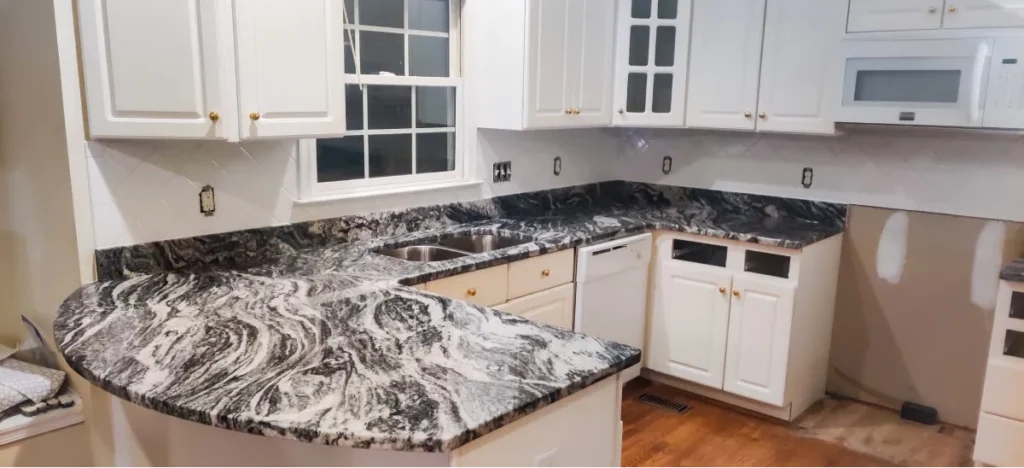
Pros and Cons of Concrete Countertops
Concrete remains popular among homeowners seeking a customized appearance and modern design aesthetic.
Advantages of Concrete Countertops
- Highly customizable shapes and sizes.
- Unique handcrafted appearance.
- Wide range of finishes and colors.
- Ability to incorporate integrated sinks and special design features.
Disadvantages of Concrete Countertops
- Greater risk of cracking.
- More frequent sealing requirements.
- Higher maintenance demands.
- Potential for staining if not properly maintained.
- Longer fabrication and curing timelines.
During a recent project discussion with homeowners in The Fan, concerns about future cracking and maintenance often outweighed the appeal of concrete’s customization options.
Pros and Cons of Natural Stone Countertops
Natural stone remains one of the most trusted materials for countertops in Richmond for its proven durability and long-term value.
Advantages of Natural Stone
- Excellent durability.
- Lower cracking risk.
- Strong resale appeal.
- Timeless visual appeal.
- Long service life.
- Easier maintenance.
Disadvantages of Natural Stone
- Natural variation in color and pattern.
- Some premium stones have higher upfront costs.
- Less customization compared to poured concrete.
Common Industry Myth Debunked
Myth: Concrete Countertops Are Indestructible
A common misconception is that concrete countertops cannot crack.
In reality, all concrete has the potential to develop cracks due to shrinkage during curing and normal structural movement. Reinforcement materials can help control crack width, but they cannot completely eliminate the possibility of cracking.
The key distinction is that many concrete cracks are cosmetic rather than structural. However, homeowners should understand that cracking is considered a normal characteristic of concrete rather than an unexpected defect.
Natural stone is not immune to damage, but high-quality granite and quartzite generally experience fewer cracking issues under typical residential conditions.
Why Homeowners Turn to Tiger Granite and Marble for Countertop Expertise
Homeowners comparing Richmond, VA, countertops often focus primarily on material selection, but the quality of fabrication and installation is equally important. Even the most durable stone can underperform if it is not measured, fabricated, and installed correctly.
Tiger Granite and Marble has extensive experience helping homeowners evaluate countertop materials based on real-world performance rather than marketing claims. By considering factors such as durability, maintenance requirements, edge profiles, support structures, and intended use, the team helps clients make informed decisions that align with their goals and lifestyle.
Professional fabrication and installation can significantly improve countertop longevity by minimizing stress points, ensuring proper support, and reducing the likelihood of future issues. This attention to detail helps homeowners maximize the value of their investment for years to come.
Applying Our Stone Performance Framework™ to Solve This
When deciding between concrete and natural stone, we recommend evaluating materials through four key criteria.
1. Assess Daily Usage
Busy kitchens often benefit from materials that require less maintenance and offer greater resistance to wear.
2. Consider Maintenance Expectations
Be realistic about how much ongoing care you are willing to perform.
3. Evaluate Long-Term Durability
Look beyond initial appearance and focus on performance over the next decade or more.
4. Compare Total Ownership Costs
Maintenance, repairs, refinishing, and longevity all contribute to the true cost of ownership.
Which Countertop Material Is Best for Most Homeowners?
For most households, natural stone provides the strongest balance of durability, maintenance, and long-term value.
- Choose concrete if complete customization is your highest priority.
- Choose concrete if you appreciate a handcrafted, evolving appearance.
- Choose natural stone if durability is your primary concern.
- Choose natural stone for lower maintenance requirements.
- Choose natural stone if long-term resale value matters.
Homeowners evaluating countertops in Richmond, VA, frequently find that granite and quartzite provide the best combination of beauty, practicality, and long-term performance.
How We Evaluate Countertop Performance
At Tiger Granite and Marble, countertop recommendations are based on practical performance criteria rather than trends alone.
Key Evaluation Factors
- Durability under everyday use.
- Maintenance requirements.
- Repairability.
- Moisture resistance.
- Long-term ownership costs.
- Overall value and lifespan.
Using these criteria helps homeowners select materials that align with both their design preferences and practical needs.
In Summary
Concrete and natural stone surfaces each offer unique advantages, but they differ in cracking risk and maintenance requirements. Concrete delivers unmatched customization opportunities, while Tiger Granite and Marble recommend natural stone for its greater structural stability, lower maintenance requirements, and superior long-term durability.
If you’re researching countertops in Richmond, VA, and want guidance from experienced professionals, contact us today. Our team can help you compare materials, understand maintenance expectations, and choose a solution that combines beauty, durability, and lasting value.
People Also Ask
Do concrete countertops add value to a home?
They can appeal to buyers seeking custom design features, but natural stone often has broader market appeal.
Can cracked concrete countertops be repaired?
Many cracks can be repaired, although some repairs may remain visible.
What is the lifespan of a concrete countertop?
A well-maintained concrete countertop can last 20 to 30 years or longer.
Which countertop material requires the least maintenance?
Natural stone options such as granite and quartzite generally require less maintenance than concrete countertops.