
Quartzite is a natural stone cut from the earth. Quartz countertops are engineered in a factory from crushed quartz mixed with resin and pigment. The names sound almost the same, but the two materials behave differently in a kitchen, especially around heat, sunlight, and sealing.
Many homeowners in Richmond first hear both words in the same week of planning, and it is easy to assume they are one product. This guide explains what each one is, how they compare in daily use, and how to check that a slab sold as quartzite is the real thing.
What Is Quartzite?
Quartzite starts out as sandstone. Over a very long time, heat and pressure deep in the earth fuse the sand grains together into a dense, hard stone. That process is why quartzite is one of the harder natural stones used for countertops.
Quartzite often features elegant veining similar to marble, with natural color variations ranging from earthy neutrals to blues and greens. Its relatively low porosity makes it a practical natural stone option, while routine maintenance typically requires only mild soap and water.
Each quartzite slab is one of a kind. Two slabs with the same trade name can still look different, because nature does not repeat itself. Some well known quartzite names, such as Taj Mahal, have become popular because of their soft, marble-like look. Availability of any specific name varies, so it is worth asking the team what is in stock.
What Is Quartz?
Quartz countertops are an engineered product. Manufacturers crush natural quartz and bind it with resin and color pigments, then press it into slabs. The result is a surface with a very consistent color and pattern from slab to slab.
Quartz is nonporous because it contains resin that binds the material together and helps prevent liquid absorption. Unlike natural stone surfaces that may require periodic sealing, quartz countertops do not need resealing. However, the resin can be sensitive to high temperatures and prolonged exposure to direct sunlight, so proper care is important to maintain the countertop’s appearance and condition.
How Do Quartzite and Quartz Compare in a Real Kitchen?
Both make strong, attractive countertops. The better choice depends on how the kitchen is used and which look the homeowner wants. Deciding between options for kitchen countertops in Richmond, VA comes down to how they compare on the points that matter most day to day.
Heat
Quartzite is a natural stone formed under heat, so it handles warm pans well. Even so, trivets are a good habit for any stone, because sudden temperature changes can stress a slab.
Quartz is a different story. Its resin can scorch, discolor, or crack under prolonged high heat. Most quartz manufacturers advise using trivets and hot pads every time a hot pot or baking sheet comes out of the oven.
Sunlight and UV
Quartzite is not affected by sunlight in the way engineered surfaces are. That makes it a fit for a sunny kitchen, a spot near large windows, or covered outdoor areas.
Quartz can discolor or develop a yellowish tint over time when exposed to strong, direct sunlight due to the resins used in its composition. For this reason, manufacturers generally recommend quartz countertops for indoor applications rather than areas with prolonged UV exposure.
Scratching
Quartzite is very hard and resists scratches from normal kitchen use. Quartz is also scratch resistant. Neither surface should be used as a cutting board, since cutting directly on stone dulls knives and can leave marks over time.
Staining
Quartz resists stains well because the resin closes off the surface. Spills still need wiping, but liquids do not soak in.
Quartzite is less porous than many natural stones, but porosity varies from slab to slab. Some quartzites absorb very little, and others take in oil or wine more readily if left sitting. A good seal and quick cleanup handle most of this.
Sealing
Quartz never needs sealing. Many quartzites benefit from sealing, and how often depends on the specific slab and how hard the kitchen works. A simple water drop test can help: if water darkens the stone after several minutes, it is time to reseal.
Look
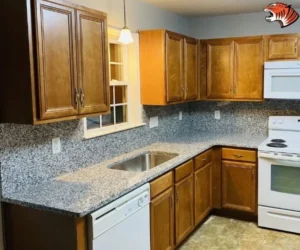
Quartzite offers natural movement, depth, and veining that no two slabs share. Selecting Richmond kitchen countertops made of engineered quartz offers a uniform, predictable look, which some homeowners prefer for a clean, modern kitchen or for long runs of matching countertop.
Quartzite vs. Quartz vs. Granite: Side by Side
Homeowners comparing quartzite vs granite often ask where all three land. This table sums up the general differences.
| Feature | Quartzite | Quartz | Granite |
|---|---|---|---|
| Origin | Natural stone, formed from sandstone | Engineered from crushed quartz and resin | Natural stone, formed from cooled magma |
| Heat | Handles heat well | Resin can scorch or discolor | Handles heat well |
| Sunlight | Not affected | Can fade or yellow with strong UV | Not affected |
| Scratching | Very hard, resists scratches | Resists scratches | Hard, resists scratches |
| Staining | Varies by slab; less porous than many stones | Resists stains | Porous to a degree; sealing helps |
| Sealing | Many slabs benefit from sealing | Never needs sealing | Commonly sealed |
| Look | Marble-like veining, unique slabs | Consistent color and pattern | Speckled or flowing patterns, unique slabs |
Granite and quartzite share many strengths, since both are natural stones. Granite usually has a more speckled or granular pattern, while quartzite tends to look more like marble.
How Can Homeowners Check a Slab Sold as Quartzite?
This is the part many buyers miss. Some stones sold as quartzite are actually marble or dolomite, which are softer and react to acids. The label alone is not always reliable, so a few simple checks are worth doing on a sample piece before choosing a slab.
- Try the glass scratch test. Press a corner of the sample firmly across a piece of glass, such as a glass tile. True quartzite is harder than glass and should scratch it. If the stone does not scratch the glass, or the stone itself gets scratched, it may be a softer stone.
- Try a drop of lemon juice or vinegar. Place a small drop on the sample and wait several minutes, then wipe it off. A dull spot or mark is etching, which suggests marble or dolomite labeled as quartzite. Real quartzite should not etch.
- Ask for the stone’s name and origin. A clear trade name and where the stone was quarried make it easier to look up and confirm what it is.
- Look at the actual slab. Since every slab is different, seeing the specific piece shows the veining, color, and any natural features that will end up on the countertop.
Only do these tests on a sample or an offcut, never on a finished countertop. If the results are unclear, the team can help explain what the stone is and how it will hold up.
Which One Fits Which Kitchen?
A simple way to think about it:
- Quartzite suits homeowners who want natural stone with a marble-like look, a sunny kitchen, or a surface that handles warm cookware well. It may need periodic sealing.
- Quartz suits homeowners who want a uniform look, no sealing, and strong stain resistance, and who are happy to use trivets and keep the counters out of strong direct sun.
Cost depends on several factors for either material, including the specific slab, the size of the kitchen, the edge profile, and the number of cutouts for sinks and cooktops. Requesting a custom estimate for kitchen countertops in Richmond based on accurate measurements is the best way to compare options.
Frequently Asked Questions
Is quartzite the same as quartz?
No. Quartzite is a natural stone that forms when sandstone is changed by heat and pressure. Quartz countertops are engineered from crushed quartz bound with resin. They share a mineral, but they are made in completely different ways.
Does quartzite need to be sealed?
Many quartzites benefit from sealing, but porosity varies from slab to slab. A water drop test shows whether a slab is absorbing liquid. Quartz, by comparison, is sealed in a permanent resin and never needs resealing.
Is quartzite harder than granite?
Quartzite is generally very hard, and many quartzites are harder than granite. Both are durable natural stones that resist scratches from everyday use. The main difference most homeowners notice is the look, with quartzite often resembling marble.
Can quartz countertops go near a sunny window?
Quartz can fade or yellow over time with strong, direct UV exposure. Manufacturers generally recommend it for indoor use away from harsh sun. In a very bright kitchen, window treatments or a natural stone like quartzite are options to consider.
How can a homeowner tell if a slab is real quartzite?
Try a glass scratch test and a drop of lemon juice or vinegar on a sample. Real quartzite should scratch glass and should not etch from the acid. Asking for the stone’s name and origin also helps confirm what it is.
Explore Quartzite and Quartz with Tiger Granite and Marble
Tiger Granite and Marble offers both quartzite and quartz countertops, along with granite and marble, for homeowners across Richmond and nearby communities. The family owned company provides a free consultation to talk through how each material fits the kitchen, then visits the home to take accurate measurements before fabricating the countertops in its own workshop.
Ready to Transform Your Kitchen? Contact us today to get started on your kitchen countertop project!