
To remove hard water stains naturally from a countertop, apply a paste of baking soda and water, let it sit for 5–10 minutes, then wipe it away with a soft microfiber cloth. For non-natural stone surfaces, a diluted solution of white vinegar or lemon juice can help dissolve mineral deposits. Always use a cleaning method suitable for the material to avoid damage.
Understanding the Chemistry of Hard Water
Hard water is not simply “dirty” water; it is water that carries a high concentration of dissolved minerals, primarily calcium carbonate, magnesium, and manganese. As water sits around kitchen fixtures or on work surfaces and slowly evaporates, it leaves behind microscopic mineral deposits. Over days and weeks, these deposits cross-link and bond into a tough crystalline structure known as calcite or limescale.
When these crystals bind to a countertop surface, they create a rough, chalky texture that traps grease, soap scum, and everyday kitchen debris. Because the mineral compound is fundamentally alkaline, traditional soap and water will not dissolve it. To safely lift the crust without damaging the factory finish of your stone, you must use a targeted natural compound that breaks the specific mineral bonds without degrading the underlying substrate.
Natural Cleaning Solutions: Material Compatibility Matrix
Not all materials used for a Richmond kitchen countertop react the same way to natural cleaners. Using the wrong household ingredient can permanently etch natural stone or discolor engineered surfaces. The matrix below outlines which natural remedies are chemically safe for specific materials based on industry restoration guidelines.
| Countertop Material | Safe Natural Cleaners | Avoid Completely | Risk Factor & Chemical Action |
| Granite & Quartzite | Baking soda paste, mild dish soap, isopropyl alcohol | Vinegar, lemon juice, chemical descalers | High risk of acid etching on calcium-rich veins |
| Marble & Limestone | pH-neutral stone soap, light baking soda paste | All acids (vinegar, citrus), abrasive scrubs | Extreme risk; immediate chemical dulling |
| Quartz (Engineered) | Diluted vinegar (short exposure), baking soda, dish soap | Harsh abrasive scrubs, highly alkaline cleaners | Low to medium risk; high pH can degrade resins |
| Soapstone | Baking soda, vinegar, mild soapy water | Heavy abrasive pads | Very low risk; chemically inert talc composition |
| Butcher Block / Wood | Lemon juice with salt, mild dish soap | Excessive water, prolonged vinegar soaking | High risk of wood warping and grain lifting |
Step-by-Step Guide to Removing Mineral Buildup Naturally
When dealing with natural stone or engineered surfaces, mechanical friction matters just as much as chemical composition. If you are struggling with mineral scale on your kitchen countertops in Richmond, VA, water profiles indicate a high concentration of dissolved solids that adhere tightly to protective sealants. Follow these precise, field-tested steps to lift tough crusts without scratching the surface finish.
Step 1: Identify Your Countertop Material
Determine whether your countertop is natural stone (granite, marble, quartzite) or engineered quartz. Natural stone is sensitive to acidic cleaners, while quartz tolerates mild acidity better but can still be damaged by harsh chemicals.
Step 2: Mix a Baking Soda Paste
For natural stone, mix 3 parts baking soda with 1 part water to form a thick paste. This gentle mixture helps loosen mineral deposits without scratching the surface.
Step 3: Apply the Paste
Spread the paste over the hard water stain with a soft cloth or your fingers. Cover it with plastic wrap and let it sit for 10–15 minutes to soften the mineral buildup.
Step 4: Wipe Clean
Remove the plastic wrap and wipe the paste away with a damp microfiber cloth in gentle circular motions. If cleaning a wood surface, always wipe in the direction of the grain.
Step 5: Rinse and Dry
Rinse the area with clean water to remove any residue, then dry it immediately with a soft towel. Prompt drying helps prevent new hard water stains from forming.
Premium Surface Specifications & Natural Remedies
To understand how natural cleaners interact with your kitchen surfaces, it helps to look at the exact technical attributes of common materials.
Key Materials and Concepts
- Baking Soda (Sodium Bicarbonate): A mild, non-abrasive cleaner that helps lift mineral deposits without scratching most countertop surfaces.
- White Vinegar (Acetic Acid): A mild acid that effectively dissolves hard water deposits on non-stone surfaces. Avoid using it on natural stone, as it can etch and damage the finish.
- Granite: A dense, low-porosity natural stone that resists deep staining when properly sealed. Most hard water stains remain on the surface rather than penetrating the stone.
- Engineered Quartz: Made from 90–95% crushed quartz bound with polymer resins, creating a non-porous surface that resists staining. However, prolonged exposure to acidic cleaners can dull its finish.
While assessing home renovations for historic properties near The Fan, our teams frequently note that older residential plumbing systems are prone to heavier mineral buildup, making routine, gentle maintenance critical.
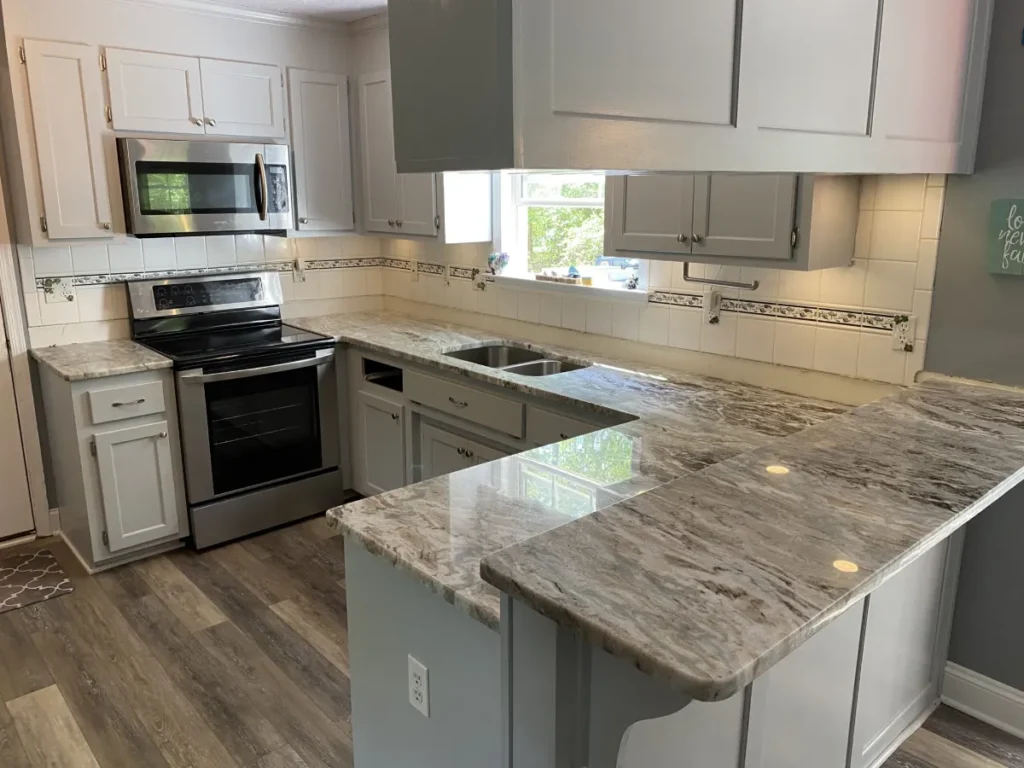
Debunking the Vinegar Myth: Why Acid Is Not a Universal Cleaner
A pervasive myth in the home maintenance industry claims that white vinegar is a universal, safe cleaner for every surface in a home. While vinegar is an exceptional asset for cleaning glass, descaling stainless steel faucets, or cleaning porcelain sinks, using it on natural stone countertops can be a catastrophic mistake.
Vinegar contains acetic acid. When this acid comes into direct contact with stones such as marble, limestone, or specific components of granite, a chemical reaction known as “etching” occurs. Etching is not a stain; it is literal chemical damage that dissolves the physical stone and strips away its factory polish. The result is a permanent, dull, white mark that cannot be wiped or washed away.
During a recent design consultation for a residential estate in Windsor Farms, our team discovered a pristine kitchen surface that had been completely dulled simply because the homeowner had used a vinegar-based spray to remove water rings. For luxury estates, kitchen countertops in Richmond residents install must be protected from aggressive scrubbing and acidic exposure alike to preserve long-term property valuation. Stick strictly to pH-neutral cleaners or gentle baking soda methods.
Long-Term Prevention Strategies
Preventing mineral buildup in the first place is far easier than clearing it after it has solidified into a crystalline crust. Making a few simple habit changes will keep your kitchen surfaces immaculate.
- Wipe Spills Immediately: Keep a dedicated dry microfiber cloth near your kitchen sink. Wipe down the perimeter of the sink and surrounding countertops after washing dishes to prevent water pools from evaporating in place.
- Maintain the Protective Seal: Natural stone surfaces require a defensive barrier to prevent moisture penetration. Test your seal by dropping a few beads of water on the surface; if the water absorbs within five minutes rather than pooling, it is time to re-seal.
- Invest in Quality Coasters: Place decorative trays or coasters underneath soap dispensers, dish soap bottles, and water pitchers. These items are notorious for trapping condensation, and water drips underneath them, creating hidden mineral rings.
While reviewing remodeling plans for an upscale property in Ginter Park, we noted that integrating built-in drainboards next to undermount sinks can significantly reduce the volume of standing water that accumulates on polished stone.
Preserving Your Home’s Value
Your kitchen surfaces are a visual centerpiece and a valuable investment. Protecting them from mineral buildup does not require harsh chemicals, just consistent, material-appropriate care. By using gentle alkaline solutions for natural stone and reserving mild acids for non-stone materials, you can preserve their beauty, durability, and polished appearance for years to come. Tiger Granite and Marble provides expert guidance and quality craftsmanship to help keep your surfaces looking their best.
If your surfaces have suffered deep etching, severe mineral scaling, or simply need professional restoration to bring back their original showroom luster, our specialized team is ready to assist. Contact Us today to speak with a stone care specialist, request a comprehensive evaluation, or explore our curated selection of premium stone surfaces designed to elevate your living spaces. Let us help you keep your investment looking pristine for a lifetime.
People Also Ask (FAQ)
Will baking soda scratch granite or quartz countertops?
No. Baking soda is a mild abrasive that is much softer than granite and quartz, making it safe for removing hard water stains.
How often should natural stone countertops be sealed?
Seal natural stone every 12–18 months, or sooner in high-use areas. A simple water drop test can help determine if resealing is needed.
Why do hard water stains keep coming back?
They form when mineral-rich water evaporates. Drying countertops after use or installing a water softener can help prevent buildup.
Can I use a razor blade to remove hard water deposits?
Avoid razor blades on quartz. For granite, they can be used carefully at a shallow angle, but only with caution to prevent damage.