
Choosing the perfect kitchen countertop requires more than picking a surface that looks good in a showroom. It’s a decision that affects daily cooking performance, long-term maintenance costs, and even home resale value. The best countertop is one that balances durability, ease of care, and design compatibility with how the kitchen is actually used.
Professionals such as Tiger Granite and Marble approach countertop selection as a technical and lifestyle decision rather than a purely aesthetic one. In real installations, material choice, fabrication quality, and installation precision all work together to determine how well a countertop performs over time.
What Defines a High-Performance Kitchen Countertop?
A countertop’s true quality is revealed under daily stress, not under showroom lighting. In practical terms, a high-performance surface must handle heat, moisture, cutting activity, and cleaning chemicals without degrading quickly.
Core performance criteria include:
- Resistance to heat from cookware and appliances
- Scratch resistance from utensils and daily prep work
- Stain resistance and porosity level
- Structural integrity under weight and overhangs
- Long-term maintenance requirements
- Precision of fabrication and installation
For example, a countertop installed without proper seam reinforcement or leveling may fail prematurely, even if the material itself is high-grade. This is why experienced fabrication teams place strong emphasis on technical accuracy during templating and installation phases.
Comparing Common Kitchen Countertop Materials
Understanding material differences is essential before making a decision. Each surface has unique strengths and limitations that impact long-term usability.
| Material | Durability | Maintenance | Heat Resistance | Appearance Style | Best Application |
| Granite | High | Medium | High | Natural variation | Family kitchens with frequent cooking |
| Quartz | Very High | Low | Medium | Consistent modern look | Low-maintenance households |
| Quartzite | Very High | Medium | Very High | High-end natural stone | Luxury, high-performance kitchens |
| Marble | Medium | High | Medium | Elegant veining | Decorative or light-use kitchens |
| Laminate | Low | Low | Low | Budget flexibility | Cost-sensitive remodels |
This type of evaluation is commonly used by stone specialists and installation professionals to ensure material selection aligns with long-term performance expectations.
Step-by-Step Guide to Choosing the Right Countertop
Step 1: Understand how your kitchen is used daily
The most important factor is usage intensity. A kitchen that sees daily cooking, hot pans, acidic ingredients, and frequent cleaning, such as many Richmond kitchen countertop installations, requires a far more durable surface than one used only occasionally.
A practical example from real-world remodeling projects shows that households with heavy cooking habits often regret choosing marble because of staining and etching caused by acidic foods like lemon juice and vinegar.
Step 2: Match material choice with maintenance expectations
Different materials require different levels of care:
- Quartz: Minimal maintenance, no sealing required
- Granite: Occasional sealing depending on usage and stone type
- Quartzite: Periodic sealing recommended for protection
- Marble: High maintenance due to sensitivity to acids and moisture
Many homeowners underestimate maintenance requirements during the selection phase, which leads to dissatisfaction later. The most suitable countertop is not always the most visually appealing; it is the one that meets long-term maintenance expectations.
Step 3: Prioritize fabrication and installation quality
Even premium materials can fail if poorly installed. This is one of the most overlooked aspects of countertop performance.
Proper fabrication ensures:
- Accurate templating and measurements
- Seam alignment that minimizes visibility
- Structural reinforcement under overhangs
- Proper support for heavy appliances
- Even leveling across the cabinetry
Working with experienced professionals such as kitchen countertop installers in Richmond, VA, helps reduce risks associated with improper installation. In practice, installation quality often has a greater impact on longevity than material choice alone.
Step 4: Select finish, edge style, and texture
These design choices affect both appearance and durability.
Finish options:
- Polished: Glossy, enhances color depth but shows fingerprints
- Honed: Matte surface with a softer, modern appearance
- Leathered: Textured finish that hides wear and improves grip
Edge profiles:
- Straight edge: Clean, modern, and minimal maintenance
- Bullnose edge: Rounded and safer for households with children
- Ogee edge: Decorative and traditional but more maintenance-heavy
These choices should reflect both design intent and practical usage conditions.
Technical Definitions for Better Decision-Making
Porosity
: The ability of a surface to absorb liquids. Lower porosity improves stain resistance and hygiene.
Thermal shock resistance
: The ability of a material to withstand sudden temperature changes without cracking or warping.
Hardness rating (Mohs scale)
: A measure of scratch resistance; quartzite ranks higher than granite and marble.
Seam integrity
: The quality and visibility of joints between countertop slabs, heavily influenced by fabrication skill.
Misconception: “All Stone Countertops Perform the Same”
A common misconception is that all stone countertops behave similarly because they are “natural” materials. In reality, performance varies significantly even within stone categories.
Granite is durable but still porous and requires sealing. Marble is elegant but chemically sensitive and prone to etching. Quartzite is extremely hard and durable, but still requires sealing. Quartz, while engineered, offers superior consistency and stain resistance.
This is why material selection should be based on performance requirements rather than general assumptions about “stone quality.”
Real-World Design and Performance Trends
1. Waterfall countertop designs
Extending the countertop material down the sides of islands improves durability and creates a continuous visual effect.
2. Neutral color dominance
Whites, grays, and soft earth tones remain popular due to long-term design flexibility and resale appeal.
3. Mixed-material kitchens
Combining materials, such as quartz for high-use zones and granite for statement areas, optimizes both cost and performance.
4. Matte finishes over glossy surfaces
Honed and leathered finishes are increasingly preferred because they hide fingerprints and surface wear more effectively.
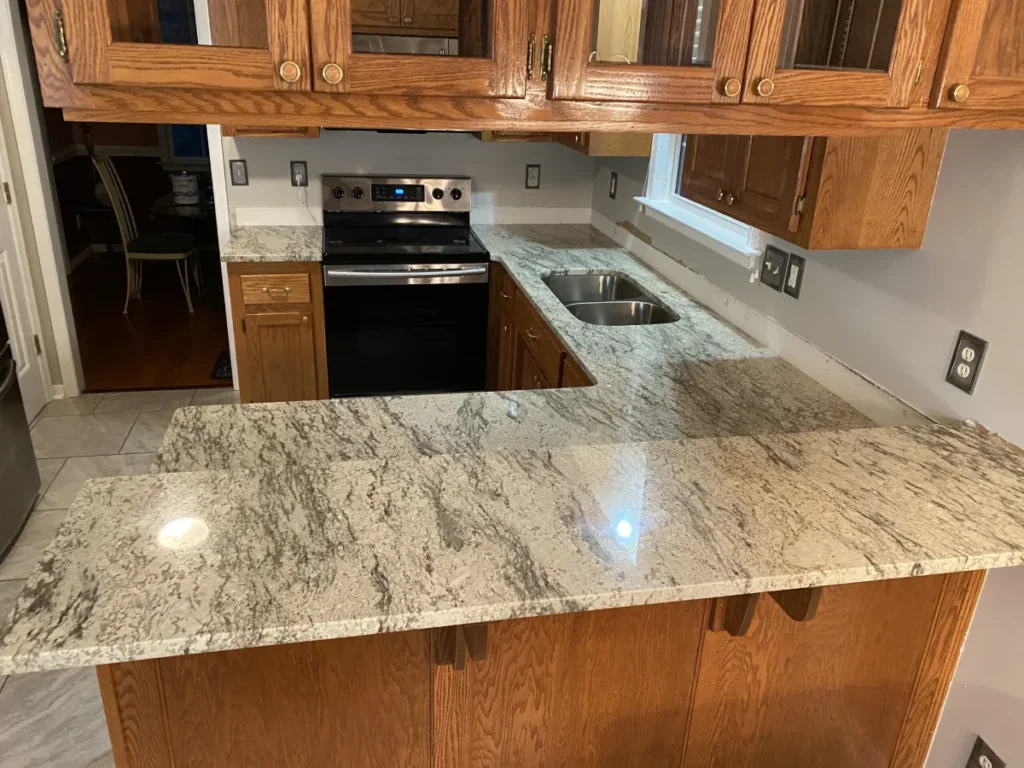
Cost vs Long-Term Value
| Material | Initial Cost | Expected Lifespan | Maintenance Level | Long-Term Value |
| Granite | Medium | 20+ years | Moderate | Strong resale value |
| Quartz | Medium-High | 20+ years | Low | High practicality |
| Quartzite | High | 25+ years | Moderate | Premium durability |
| Marble | High | 15–20 years | High | Aesthetic-driven value |
Long-term value is strongly influenced by durability and maintenance cost, not just upfront pricing.
Why Expertise in Countertops Matters
Experience
Field experience consistently shows that countertop issues are more often caused by installation errors than material defects. Misaligned seams, weak support under overhangs, and improper leveling are common failure points.
Expertise
Specialists such as Tiger Granite and Marble evaluate stone density, fabrication tolerances, and structural stress points before cutting begins. This technical approach ensures countertops are not only visually appealing but structurally sound.
Authoritativeness
Established fabricators with proven installation histories demonstrate reliability across residential and commercial projects. Their expertise is reflected in consistent results and long-term client satisfaction.
Trustworthiness
Transparent material sourcing, accurate templating, and warranty-backed installation practices are key indicators of trustworthy service providers.
In many remodeling projects, homeowners working with experienced kitchen countertop installers in Richmond report fewer long-term maintenance issues and better durability outcomes.
The perfect kitchen countertop balances durability, maintenance requirements, and design preference. Quartz offers low maintenance, granite provides natural durability, and quartzite delivers premium strength and aesthetics. However, installation quality is equally important to ensure long-term performance.
In Summary
Choosing the perfect kitchen countertop is ultimately about aligning material performance with real-world kitchen use. A surface that looks beautiful but cannot handle the demands of daily cooking will quickly become a liability, while a well-matched material can last for decades with minimal issues.
For homeowners seeking expert guidance, precise fabrication, and dependable installation, Tiger Granite and Marble provides end-to-end support, from material selection to professional installation, ensuring countertops are built for both style and long-term durability.
Contact us today to get started on your project and bring your vision to life.
People Also Ask (FAQ)
What countertop material lasts the longest?
Quartzite and granite typically last over 20 years when properly maintained and installed.
Which countertop is easiest to maintain?
Quartz requires the least maintenance because it is non-porous and does not require sealing.
Is granite still a good choice for modern kitchens?
Yes. Granite remains popular due to its natural beauty, durability, and heat resistance.
What is the biggest mistake when choosing countertops?
Choosing based on appearance alone without considering maintenance and usage demands.