
Replacing a kitchen countertop is one of the most effective ways to upgrade a kitchen because it directly improves usability, durability, and overall design cohesion without requiring a full remodel. Since countertops occupy the largest continuous work surface in the kitchen, even a single material change can significantly modernize the entire space.
For homeowners evaluating a kitchen countertop project, this type of upgrade is often the most efficient way to achieve a high-end look while keeping costs and disruption under control.
Why Countertop Replacement Has an Immediate Impact
Countertops influence both how a kitchen functions and how it is perceived visually. Because they are used daily for food preparation, storage, staging, and cleaning, worn or outdated surfaces tend to make the entire kitchen feel older than it is.
Practical improvements include:
- Better resistance to heat, stains, and scratches
- Improved hygiene due to smoother, sealed surfaces
- Easier cleaning and reduced maintenance effort
- Stronger visual alignment with modern appliances
- Increased perceived property value
In real renovation work, replacing a countertop is often the fastest way to eliminate multiple visual issues at once, such as discoloration, surface wear, and outdated textures, without altering cabinetry or layout.
In many homes undergoing an upgrade for a kitchen countertop in Richmond, homeowners often describe the change as a “full kitchen refresh,” even when no structural modifications are made.
How Countertops Influence Kitchen Design and Function
A kitchen’s design is not determined solely by cabinets or flooring. Countertops act as the visual bridge between all major elements.
Design roles countertops play:
- Anchor visual tone (modern, traditional, transitional)
- Define color continuity across cabinetry and backsplash
- Influence perceived cleanliness and space brightness
- Affect workflow efficiency during cooking and prep
A poorly chosen or worn surface can visually “age” a kitchen, while a properly selected material can elevate even older cabinetry.
In residential upgrades involving a Richmond, VA kitchen countertop replacement, design consistency is often the primary reason homeowners prioritize surface updates before full remodeling.
Material Comparison: What Actually Matters in Daily Use
Choosing a countertop material should be based on performance, maintenance requirements, and long-term durability, not just appearance.
| Material | Durability | Maintenance | Heat Resistance | Stain Resistance | Practical Use |
| Quartz | Very High | Low | Medium | Very High | Everyday family kitchens |
| Granite | High | Medium | High | Medium | Heavy cooking environments |
| Marble | Medium | High | Low | Low | Aesthetic-focused spaces |
| Laminate | Low | Low | Low | Low | Budget renovations |
| Butcher Block | Medium | Medium | Low | Medium | Warm, natural interiors |
Quartz: Engineered for Consistency
Quartz surfaces are manufactured using crushed stone and resin, resulting in a non-porous material that resists staining and bacterial growth. It is one of the most practical choices for busy households due to its low maintenance requirements.
Granite: Natural Durability with Variation
Granite is an igneous rock formed under extreme heat, making it highly resistant to damage from cookware and daily use. Each slab is unique, which adds natural variation to kitchen design.
Marble: High-End Aesthetic with Tradeoffs
Marble offers a premium visual appearance but is sensitive to acids and scratching. It is best suited for homeowners who prioritize aesthetics over heavy-use performance.
Step-by-Step Countertop Replacement Process
A professional countertop replacement follows a structured process to ensure accuracy and long-term performance.
1. Initial Site Evaluation
Technicians assess cabinet alignment, wall straightness, appliance spacing, and plumbing layout. This ensures the new countertop will fit precisely without structural issues.
2. Material Selection and Slab Review
Homeowners select from full slabs rather than samples alone. This step is critical because natural stone varies significantly in pattern and tone.
3. Precision Templating
Accurate templates are created using laser tools or physical boards. This stage determines sink placement, edge overhang, and seam positioning.
4. Fabrication Process
Slabs are cut using CNC machinery for precision. Edges are shaped, polished, and finished according to design specifications.
5. Removal of Existing Surfaces
Old countertops are carefully removed to avoid damaging cabinets or surrounding finishes.
6. Installation and Seaming
New countertops are installed, leveled, and bonded. Seam epoxy is color-matched to reduce visibility.
7. Final Inspection
Installers verify alignment, surface finish, seam quality, and fixture fitment.
Misconception: Countertop Replacement Only Makes Sense During a Full Remodel
One of the most persistent misconceptions in kitchen renovation is that countertops should only be replaced as part of a full remodel. In reality, countertop replacement is frequently a standalone upgrade with high visual return and minimal disruption.
The reality:
- Cabinets do not need to be replaced if structurally sound
- Plumbing systems remain unchanged in most cases
- Installation typically takes only a few days
- Cost is significantly lower than a full kitchen renovation
This makes surface replacement one of the most efficient upgrade strategies available to homeowners seeking noticeable improvement without major construction.
Performance Specifications and Feature Definitions
Understanding technical characteristics helps homeowners make informed decisions.
Non-Porous Surface
A surface that prevents liquid absorption, reducing staining and bacterial growth. Common in engineered quartz.
Heat Resistance Threshold
The maximum temperature a countertop can withstand before structural or cosmetic damage occurs.
Edge Profile
The finished shape of countertop edges affects both appearance and safety:
- Straight edge: clean, modern aesthetic
- Beveled edge: angled refinement
- Rounded edge: softer, safer profile
Seaming Tolerance
The precision level between joined slabs. Lower tolerance means tighter, less visible seams.
Porosity Rating
A measurement of how much liquid a surface absorbs. Lower porosity improves durability and hygiene.
Maintenance and Longevity
Long-term performance depends on both material selection and care habits.
Recommended maintenance practices:
- Wipe spills immediately to prevent staining or etching
- Use cutting boards instead of directly cutting on surfaces
- Avoid harsh, acidic, or abrasive cleaners
- Apply sealant periodically for natural stone surfaces
- Use heat protection pads under cookware
Quartz requires minimal maintenance, while marble demands more frequent care due to its sensitivity to acids and scratches.
Design Impact in Real Renovation Scenarios
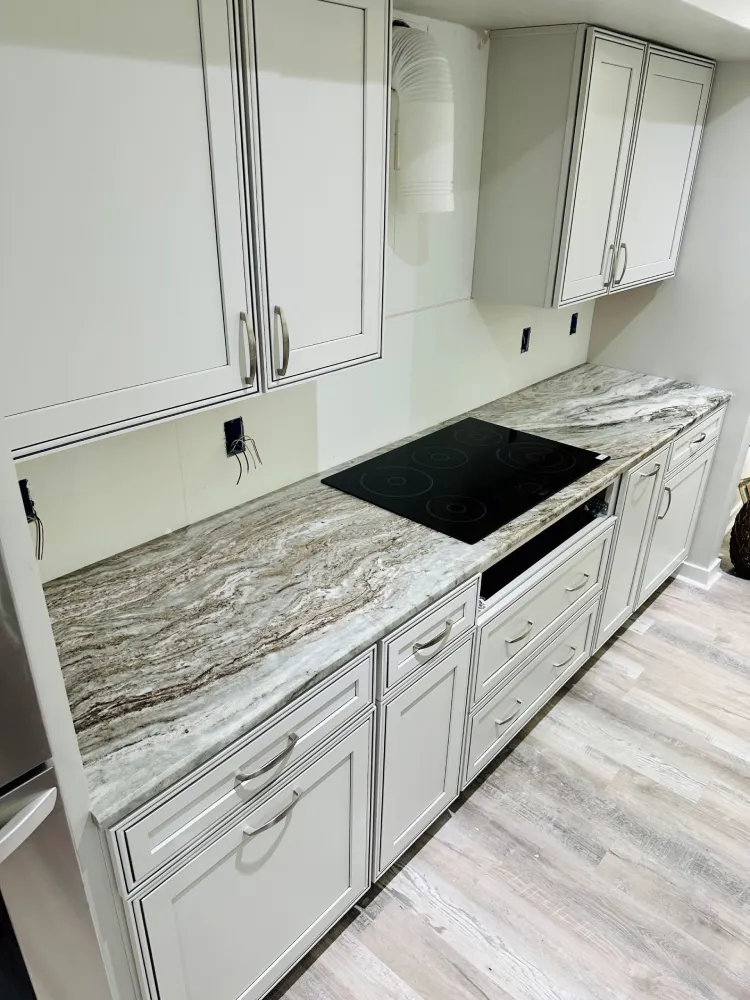
In real-world projects, countertop replacement often delivers a disproportionate visual transformation compared to its scope of work. This is because countertops occupy a dominant horizontal plane in kitchen design.
In homes undergoing a replacement for a kitchen countertop in Richmond, VA, designers often prioritize replacing the surface first because it addresses multiple aesthetic issues simultaneously, including color imbalance, outdated textures, and surface wear.
In practice, this type of upgrade often delays or eliminates the need for full kitchen remodeling.
About Tiger Granite and Marble
Tiger Granite and Marble specializes in custom stone fabrication and installation, focusing on precision templating, slab quality selection, and controlled fabrication processes. The company emphasizes accuracy, material consistency, and long-term performance in residential countertop projects.
In Summary
Replacing a kitchen countertop is one of the most effective and efficient ways to upgrade a kitchen without undergoing a full renovation. It enhances visual appeal, improves daily functionality, and increases long-term property value through a focused, high-impact improvement.
For homeowners considering a kitchen countertop project or a similar surface upgrade, working with experienced fabricators such as Tiger Granite and Marble and selecting the right material ensures precise fitment and lasting durability.
To begin a professionally guided countertop project, contact us today for expert consultation and installation support.
Frequently Asked Questions (People Also Ask)
What is the most durable kitchen countertop material?
Quartz and granite are widely considered the most durable due to their hardness and resistance to wear and heat.
How long does countertop replacement take?
Most installations are completed within 1–3 days after fabrication is finished.
Can countertops be replaced without changing cabinets?
Yes. As long as cabinets are structurally sound and level, countertops can be replaced independently.
What countertop requires the least maintenance?
Quartz requires the least maintenance due to its non-porous engineered structure.
Does replacing countertops increase home value?
Yes. Kitchen countertop upgrades consistently rank among the highest-ROI interior improvements in residential real estate.