
Granite countertops can be safe for direct contact with certain foods when the surface is properly finished, cleaned, maintained, and treated with food-contact-appropriate products. However, granite should not replace a cutting board, particularly when handling raw meat, poultry, or seafood. Proper sanitation and avoiding cross-contamination are essential for safe food preparation.
What Makes Granite Countertops Suitable for Food Preparation
Granite is a natural igneous stone formed when molten rock cools and solidifies beneath the Earth’s surface.
It commonly contains minerals such as quartz and feldspar, which contribute to its hardness and distinctive appearance.
When professionally fabricated, granite provides a durable kitchen work surface that can handle many everyday cooking activities.
Homeowners considering granite countertops in Richmond, VA often appreciate the material’s combination of natural beauty and practical performance.
However, hardness alone does not determine whether a countertop is hygienic.
Food safety depends on several factors:
- Surface condition: Smooth, intact finishes are generally easier to clean than damaged areas.
- Porosity: Natural stone can absorb moisture to varying degrees.
- Sealing: Appropriate sealers help limit liquid absorption and staining.
- Cleaning practices: Food residue and contaminants must be removed regularly.
- Cross-contamination prevention: Handle raw foods separately from ready-to-eat ingredients.
A properly maintained granite surface can support normal kitchen preparation, but you should never assume it is sterile.
Is Granite Naturally Resistant to Bacteria
Granite does not inherently kill bacteria.
Although its dense mineral structure makes it durable, natural stone may contain microscopic pores, fissures, and mineral boundaries.
Bacteria can remain on granite if food residue is left behind or if contaminated utensils and ingredients contact the surface.
The important distinction is that a material’s hardness does not make it antimicrobial.
For example, a homeowner in The Fan preparing vegetables for dinner should clean the countertop before placing ready-to-eat ingredients directly on it.
The same food safety principles apply whether the kitchen has granite, quartz, laminate, or another countertop material.
Does Granite Absorb Liquids?
Some granite varieties absorb liquids more readily than others.
Absorption depends on the stone’s mineral composition, natural structure, finish, and surface treatment.
These terms help explain granite’s behavior:
- Porosity: The presence of tiny openings within a material.
- Absorption: The movement of liquid into those openings.
- Sealer: A protective treatment intended to reduce liquid penetration.
- Staining: Discoloration caused when substances enter or react with the surface.
- Sanitation: A process that reduces microorganisms to safer levels using appropriate methods.
A sealer can reduce staining and absorption, but it does not make granite completely nonporous or permanently bacteria-free.
Can You Cut Vegetables, Meat, or Bread Directly on Granite
Certain low-risk food preparation activities can be performed on a clean, appropriately maintained granite surface.
However, direct cutting is generally discouraged because it can damage knives, create unnecessary wear, and complicate sanitation.
The recommended approach varies by food type.
| Food or Activity | Direct Granite Contact | Recommended Practice |
| Rolling bread or pastry dough | Generally suitable on a properly cleaned, food-contact-safe surface | Clean beforehand and remove residue afterward |
| Placing washed fruits | Acceptable on a clean surface | Use a clean tray when convenient |
| Cutting vegetables | Not recommended | Use a dedicated cutting board |
| Preparing raw chicken | Avoid direct contact | Use a separate cutting board |
| Handling raw seafood | Avoid direct contact | Use a dedicated cutting board |
| Preparing sandwiches | Generally acceptable on a clean surface | Keep utensils and ingredients sanitary |
| Cutting bread | Not recommended | Use a breadboard |
The safest kitchen arrangement uses dedicated cutting boards for different food categories.
This reduces unnecessary contamination while helping preserve the countertop’s appearance.
Why Should You Avoid Cutting Directly on Granite?
Cutting directly on granite can dull knives, damage vulnerable edges, and increase cross-contamination risks.
1. Knife Damage
Granite is harder than most knife blades’ intended cutting surfaces, so repeated contact can dull or damage the cutting edge.
2. Surface Wear
Granite resists many scratches but can still be damaged by impacts, abrasive particles, and repeated contact with hard objects.
3. Cross-Contamination
Preparing raw meat and vegetables on the same uncleaned surface can transfer harmful bacteria. Use separate cutting boards and clean countertops properly between food preparation tasks.
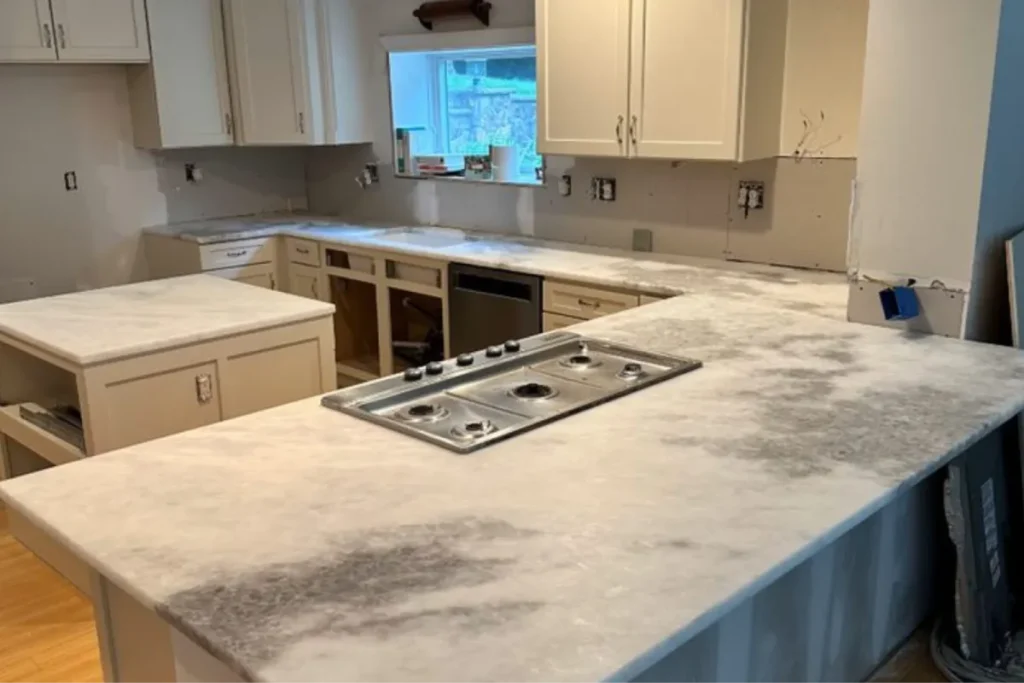
How Do You Clean Granite Before Preparing Food
Safe food preparation begins with proper cleaning.
Homeowners researching granite countertops in Richmond should understand that a decorative appearance and sanitary condition are not necessarily the same.
A countertop may look clean but still contain food residue or microorganisms.
Step-by-Step Granite Cleaning Routine
- Remove loose debris. Clear crumbs, utensils, and food particles from the surface.
- Wash with a compatible cleaner. Use mild dish soap and warm water or a stone-safe product approved for the countertop.
- Wipe thoroughly. Use a clean, soft microfiber cloth rather than a dirty kitchen sponge.
- Rinse when necessary. Remove cleaning residue with clean water, especially before direct food contact.
- Dry the surface. Use a fresh cloth to reduce lingering moisture.
- Sanitize when appropriate. After raw food contamination, use a sanitizer suitable for food-contact surfaces and compatible with the stone and sealer, and follow the label instructions.
Don’t assume every general household disinfectant is appropriate for direct food-contact areas.
Some products require rinsing or specific contact times.
The cleaner and sanitizer should also be compatible with the installed stone’s finish and protective treatment.
Does Sealing Granite Make It Safer for Food Preparation?
Sealing granite helps reduce liquid absorption and staining but does not replace proper cleaning and sanitation. Homeowners in the Museum District should choose sealers approved for their stone and intended food-contact use.
How Do You Know If Granite Needs Resealing?
Resealing frequency depends on the granite’s porosity and existing sealer. Signs may include faster liquid absorption, moisture-related darkening, or increased staining. A water-drop test can provide a preliminary indication, but it cannot confirm surface hygiene. Follow the sealer manufacturer’s maintenance recommendations.
Common Myth: Sealed Granite Is Completely Bacteria-Proof
Sealing granite reduces liquid absorption but does not eliminate bacteria or replace proper sanitation. Bacteria can remain on poorly cleaned surfaces, so use separate cutting boards and clean countertops with suitable products.
What Cleaning Products Should You Avoid on Granite?
Some cleaning products can damage stone finishes, affect sealers, or leave unwanted residue. Avoid using the following unless approved for your countertop:
- Vinegar and lemon-based cleaners: Acidity may affect certain treatments and surrounding materials.
- Abrasive powders: Repeated scrubbing can dull the finish.
- Unapproved disinfectants: Some formulations may be unsuitable for natural stone or food-preparation surfaces.
- Harsh degreasers: Strong chemicals may compromise protective treatments.
Use manufacturer-approved cleaners, follow label directions, and never mix cleaning chemicals.
What Should You Look for When Choosing Granite Countertops
Selecting the right granite involves more than choosing an attractive slab.
Kitchen performance also depends on fabrication quality, stone characteristics, and installation.
When comparing Richmond, VA granite countertops, ask suppliers and installers about the material’s finish, maintenance requirements, and sealing recommendations.
Important considerations include:
- Stone quality: Examine the slab for structural concerns and natural variations.
- Surface finish: Choose a finish that matches your desired look and cleaning preferences.
- Edge profile: Choose edges that suit the kitchen design and are easy to maintain.
- Seams: Ask where seams will be placed and how they will be finished.
- Sealing requirements: Understand whether the selected granite needs treatment.
- Installation workmanship: Proper support, measurements, and fabrication contribute to long-term performance.
An informed purchase balances appearance, practical use, and reasonable maintenance expectations.
Make Your Kitchen Beautiful, Practical, and Safe
When properly installed, cleaned, and maintained, granite countertops can provide a durable, attractive surface for everyday cooking.
However, food safety depends on more than the countertop material.
Using dedicated cutting boards, preventing cross-contamination, choosing compatible cleaning products, and understanding sealing requirements are all essential.
Whether you are remodeling your kitchen or planning a new installation, Tiger Granite and Marble can help you select the right stone and create a kitchen that suits your needs and style.
Ready to upgrade your kitchen with beautiful natural stone?
Contact us to explore granite countertop options, discuss your kitchen design, and request a free estimate.
People Also Ask
Can Bacteria Grow on Granite Countertops?
Bacteria can remain on granite when the surface is contaminated or inadequately cleaned. Proper cleaning and food-contact-safe sanitation help reduce risks. Sealing alone does not kill bacteria.
Is It Safe to Put Raw Meat Directly on Granite?
Using a dedicated cutting board is safer. Raw meat juices can contaminate the countertop and nearby ingredients. Clean and appropriately sanitize any surfaces exposed to raw meat.
Can You Prepare Bread Dough Directly on Granite?
Yes, as long as the granite is clean, in good condition, and treated only with products suitable for food-contact surfaces. Remove cleaning residue before working with dough.
How Often Should Granite Countertops Be Sealed?
Sealing frequency depends on the stone’s absorption, existing treatment, and use. Some countertops need periodic resealing, while others require less maintenance.
Is Granite More Hygienic Than Quartz?
Both materials can support hygienic food preparation with proper maintenance. Quartz generally has lower absorption, while granite may require sealing. Cleaning practices remain essential regardless of material.