
Moisture resistance is important for kitchen countertops because it helps prevent stains, water damage, bacterial growth, and premature wear. Choosing a countertop material with strong moisture resistance and maintaining it properly can improve durability, simplify cleaning, and help preserve your kitchen’s appearance and performance for years.
Why Kitchen Countertops Are Constantly Exposed to Moisture
Unlike many other surfaces in a home, kitchen countertops encounter water throughout the day.
Common sources of moisture include:
- Cooking spills
- Water around sinks
- Steam from pots and pans
- Beverage condensation
- Food preparation
- Routine cleaning
Over time, repeated exposure can affect countertop materials differently depending on their composition and level of porosity.
Selecting durable kitchen countertops with good moisture resistance helps reduce the risk of long-term damage.
How Moisture Can Affect Countertop Materials
When moisture penetrates certain countertop materials, it may contribute to problems such as:
- Staining
- Discoloration
- Surface deterioration
- Mold or mildew in surrounding areas
- Damage to cabinetry beneath the countertop
The degree of risk depends largely on whether the countertop is porous or non-porous.
Professional fabrication and installation by a qualified kitchen countertop installer in Richmond also help limit moisture intrusion around seams, sinks, and edges.
Quartz Offers Excellent Moisture Resistance
Quartz is one of the most moisture-resistant countertop materials available.
Because it is engineered to be non-porous, quartz naturally resists water absorption without requiring periodic sealing.
Benefits of quartz include:
- Excellent moisture resistance
- Low maintenance
- Strong stain resistance
- Consistent appearance
- Easy cleaning
For many homeowners, quartz provides an attractive balance between durability and everyday convenience.
A homeowner in Short Pump who regularly prepares meals for a busy family may appreciate how easily quartz countertops clean up after spills and food preparation.
Granite Performs Well With Proper Sealing
Granite remains one of the most popular natural stone countertop materials.
Although granite is durable and naturally resistant to heat, it contains microscopic pores that can absorb moisture over time.
Proper sealing helps:
- Reduce water absorption.
- Improve stain resistance.
- Preserve the stone’s appearance.
- Extend countertop longevity.
- Simplify routine maintenance.
Periodic resealing helps maintain granite’s protective barrier and long-term performance.
Marble Requires Additional Attention
Marble offers timeless beauty but generally requires more maintenance than quartz or granite.
Because marble is more porous, it can be more susceptible to:
- Water absorption
- Etching
- Staining
- Surface discoloration
Regular sealing and prompt cleanup of spills help preserve its appearance.
Homeowners who love marble often choose it for its distinctive character while understanding the maintenance involved.
Moisture Resistance Supports Better Kitchen Hygiene
A moisture-resistant countertop can also contribute to a cleaner kitchen environment.
Non-porous surfaces are generally easier to clean because liquids remain on the surface rather than soaking into the material.
This helps reduce:
- Lingering food residue
- Staining
- Difficult-to-clean buildup
Professional installation of kitchen countertops in Richmond also ensures seams and sink cutouts are properly fabricated to minimize opportunities for water intrusion.
Proper Installation Is Just As Important As Material Selection
Even highly durable countertop materials perform best when professionally fabricated and installed.
Experienced installers carefully address:
- Seam placement
- Sink cutouts
- Edge finishing
- Surface leveling
- Secure installation
These details help minimize areas where moisture could collect while improving the countertop’s long-term performance.
For example, a homeowner in The Fan investing in custom countertops benefits from precise fabrication that supports both appearance and functionality.
Daily Maintenance Helps Preserve Moisture Resistance
Although some materials require less maintenance than others, proper care helps every countertop perform better over time.
Helpful habits include:
- Wiping spills promptly.
- Using cutting boards.
- Cleaning with manufacturer-approved products.
- Resealing natural stone when recommended.
- Avoiding harsh chemical cleaners.
Routine maintenance helps preserve the countertop’s finish while supporting long-term durability.
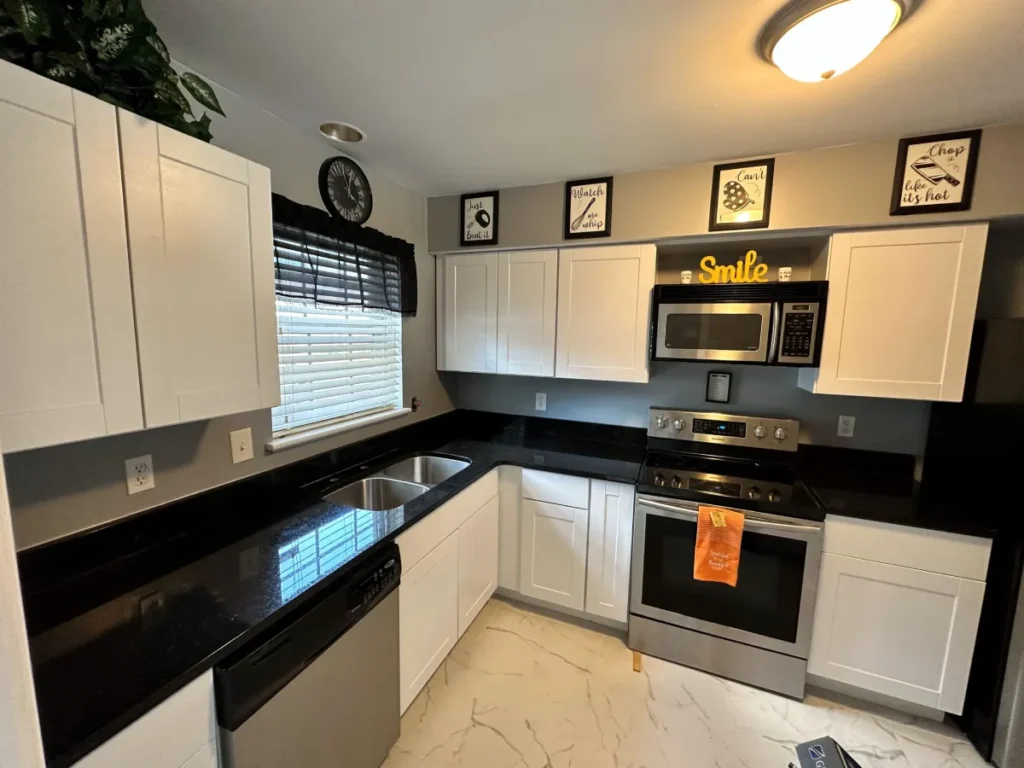
Choosing the Right Countertop for Your Lifestyle
Every household uses its kitchen differently.
Families that cook frequently, entertain guests, or spend significant time preparing meals may prioritize:
- Moisture resistance
- Stain resistance
- Easy maintenance
- Long-term durability
A homeowner in Midlothian planning a kitchen remodel may compare granite and quartz based on these practical considerations in addition to style and color preferences.
Understanding how moisture affects each material allows homeowners to select a countertop that meets both their design goals and everyday needs.
Moisture Resistance Comparison of Popular Kitchen Countertop Materials
| Countertop Material | Moisture Resistance | Sealing Required | Maintenance Level |
| Quartz | Excellent | No | Low |
| Granite | Very Good | Yes, periodically | Moderate |
| Marble | Moderate | Yes | Higher |
| Laminate | Good | No | Low |
| Butcher Block | Moderate | Yes | Higher |
Each countertop material offers unique advantages. While quartz provides exceptional moisture resistance with minimal maintenance, natural stones like granite can also perform extremely well when properly sealed and cared for.
Kitchen Countertop Terms Every Homeowner Should Know
Understanding these common countertop terms can make it easier to compare materials and choose the right surface for your kitchen.
- Quartz Countertop: An engineered stone surface that is non-porous, highly resistant to moisture and stains, and requires minimal maintenance.
- Granite Countertop: A natural stone surface known for its durability, heat resistance, and unique patterns. It typically benefits from periodic sealing.
- Porosity: The degree to which a material absorbs liquids through tiny pores. Lower porosity means better resistance to moisture and staining.
- Sealer: A protective treatment applied to natural stone to reduce moisture absorption and improve stain resistance.
- Water Absorption: The amount of moisture a countertop material can absorb over time, affecting its durability and maintenance needs.
- Fabrication: The process of measuring, cutting, shaping, polishing, and finishing countertop slabs before installation.
Myth: All Countertop Materials Are Completely Waterproof
One common misconception is that every countertop material offers the same level of protection against water.
In reality, moisture resistance varies considerably between materials. Quartz is non-porous and naturally resists moisture without sealing. Granite offers excellent moisture resistance but generally benefits from periodic sealing to maintain its protective barrier. Marble and other natural stones are typically more porous and require more attentive maintenance.
Choosing the right kitchen countertops in Richmond, VA involves understanding how each material performs under everyday conditions and following the manufacturer’s recommended care guidelines.
Tips for Maintaining Moisture-Resistant Countertops
To help your countertops maintain their appearance and performance for years to come:
- Wipe up spills promptly to reduce the chance of staining.
- Clean surfaces regularly with products recommended for your countertop material.
- Reseal natural stone countertops according to professional recommendations.
- Avoid allowing standing water to remain around sinks and seams.
- Use cutting boards instead of cutting directly on the countertop surface.
- Place hot cookware on trivets or heat pads when appropriate.
- Schedule professional inspections if you notice damage or worn sealant.
Consistent maintenance helps preserve both the beauty and functionality of your countertops.
In Summary
Moisture resistance plays a key role in countertop durability, maintenance, hygiene, and long-term performance. Whether you choose quartz for its non-porous surface or granite for its natural beauty and strength, understanding how each material handles moisture helps you make a confident decision.
For expert guidance, precision fabrication, and professional installation, trust Tiger Granite and Marble. Our team can help you compare granite, quartz, and other premium countertop materials to find the best fit for your home’s style and performance needs.
Contact us today to schedule a consultation and discover custom countertop solutions designed to enhance your kitchen while providing lasting beauty and dependable everyday performance.
People Also Ask
Why is moisture resistance important for kitchen countertops?
Moisture resistance helps reduce the risk of staining, water absorption, bacterial buildup, and long-term damage, making countertops easier to maintain and helping preserve their appearance.
Which countertop material is the most moisture resistant?
Quartz is widely recognized as one of the most moisture-resistant countertop materials because it is engineered to be non-porous and does not require periodic sealing.
Does granite absorb water?
Granite has natural microscopic pores, but when properly sealed, it offers excellent resistance to moisture and staining for everyday kitchen use.
How often should granite countertops be sealed?
The ideal sealing schedule depends on the type of granite, how heavily the countertop is used, and the sealer applied. A countertop professional can recommend an appropriate maintenance schedule.
Can moisture damage kitchen countertops?
Yes. Depending on the material, prolonged moisture exposure may contribute to staining, discoloration, deterioration, or damage around seams and sink areas if the countertop is not properly maintained.